Casino
Hand That Beats a High Card in Poker – Know Your Winning Moves
March 28, 2025

Poker is a game built on both skill and strategy, but understanding hand rankings is the foundation of every great move. Whether you’re bluffing, betting, or folding, knowing what each hand means—and more importantly, which hands outrank others—will give you a serious edge at the table.
This article is your ultimate guide to answering that question and expanding your knowledge of hand rankings, strategy, and how to level up your game from beginner to boss.
Before diving into the hand that beats a high card in poker, it’s essential to understand what a high card hand actually is. In poker, a high card occurs when a player holds five unmatched cards that don’t qualify as any other standard hand.
Let’s say your cards are 10♣, 8♦, 6♠, 3♥, and 2♠—no pairs, no sequence, and no shared suits. The strongest card, in this case, is the 10♣, making it a “ten-high.” If your opponent only has a nine-high, you win. But as far as poker hand rankings go, this is the weakest possible outcome.
This is the kind of hand you’ll likely fold unless you’re in a bluffing situation or playing heads-up. But what’s the next step up?
Let’s get to the heart of the matter—what comes next in the poker hand rankings above a simple high card? The answer: One Pair.
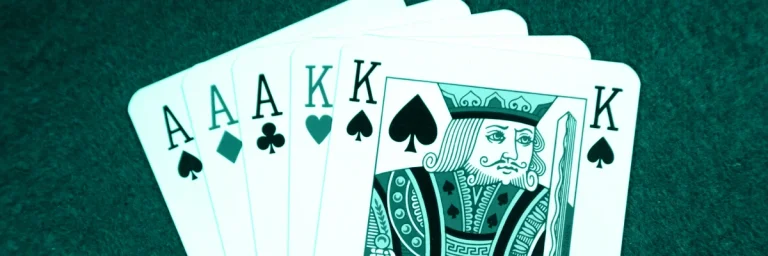
This is the first meaningful step up the ladder and is made up of two cards of the same rank, along with three unrelated side cards. For instance:
This combination significantly improves your chances at the table. It’s a hand that adds real weight in most matchups, even outperforming seemingly strong single cards like Ace-high or King-high.
Recognising when you’ve landed a pair—or something better—can totally transform your approach, turning passive checks into confident value bets that put pressure on your opponents.
To truly grasp why One Pair is the hand that beats a high card in poker, you need to understand where both sit in the grand poker hierarchy.
As you can see, a high card is the lowest-ranking hand you can hold, and even One Pair is considered a major upgrade. When you’re looking at a messy board and no connections, realising you only have a high card tells you it’s time to tread carefully.
Understanding the order of hands helps you make better decisions and clearly understand what hand beats what in poker during high-pressure moments. If you’re ever unsure mid-game, refer back to the basics—knowing what hand beats what in poker can be the difference between folding and a flawless win.
A surprising number of casual players underestimate the value of knowing hand rankings by heart. But understanding the hands is more than academic—it’s about real-world strategy.
If you’re playing online, like at Betpandacasino.io, where hands are revealed quickly and play is fast-paced, a solid knowledge of rankings keeps you in control and ahead of the curve.
It’s easy to end up with a high card hand—especially if you’re playing loose or ignoring position. But if you keep landing on weak hands, it might be time to reassess your habits.
Recognising these issues can help you shift towards stronger, more consistent gameplay. By avoiding these pitfalls, you’ll see the hand that beats a high card in poker more often.
Every poker player eventually wants to go from holding high cards to actually landing hands worth betting on. The good news? There are proven ways to boost your hand quality—and your winnings.
By following these tactics, you’ll find yourself holding the hand that beats a high card in poker far more often—and winning more confidently.
Poker isn’t just a numbers game; it’s also mental. Getting a high card hand repeatedly can be frustrating—but keeping your cool is key to staying in control and making smart moves.
If you’re playing long sessions at Betpandacasino.io, knowing how to mentally navigate weak hands helps you avoid tilt and stay sharp for the next big pot.
Reading your opponents is part of what makes poker so compelling. While you may only have a high card, someone else might be sitting on that dreaded One Pair—or even more.
If you suspect someone’s got the hand that beats a high card in poker, and you’re holding nothing, don’t be afraid to fold and wait for your moment.
Here’s a quick example to bring it home:
You’ve got King-high. They’ve got One Pair. Even though your cards look better in isolation, the One Pair wins every time. It’s a classic case of the hand that beats a high card in poker in action.
When it comes to honing your poker skills, finding a reliable and engaging platform is essential. At Betpandacasino.io, you get access to real-time poker action, crypto convenience, and tools to improve your game.
If you’re refining your strategy or just starting out, Betpandacasino.io gives you the tools and support to grow as a confident, successful player. It’s not just about playing—it’s about levelling up every time you sit at the table.
At the end of the day, knowing the hands is one of the simplest, yet most important steps in your poker journey. One Pair might not sound glamorous, but it’s a massive leap up the hand hierarchy—and one that could help you win pots you’d otherwise lose.
Mastering this concept lays the groundwork for understanding more complex hands and advanced strategies. It teaches you discipline, logic, and timing—skills that translate to every level of the game.
And remember, whether you’re grinding on your phone or making moves on your laptop, Betpandacasino.io is your go-to platform for poker excellence.
try your luck at poker with bitcoin